
Introduction: Why Choosing the Right eCommerce Platform Matters in 2025
The world of eCommerce is booming. In 2025, online sales are projected to surpass $7 trillion globally, and the opportunities for beginners have never been bigger. Amazon vs Shopify 2025: Many beginners wonder which platform is best to start an online business. In this guide, we’ll compare fees, ease of use, and potential profits to help you decide.
Whether you want a side hustle or a full-time online business, choosing the right platform can make or break your success.
Two of the most popular platforms for beginners are Amazon and Shopify. Each has its strengths, weaknesses, and ideal use cases. In this blog, we’ll break down both platforms in detail, give step-by-step guides, explore marketing strategies, compare costs, and help you make the best choice for your online business in 2025.
Amazon: The Marketplace Giant
Amazon is the largest online marketplace in the world, and for good reason. Millions of shoppers visit Amazon daily, looking for products in every imaginable category.
Why Beginners Love Amazon
- Instant Access to a Massive Audience
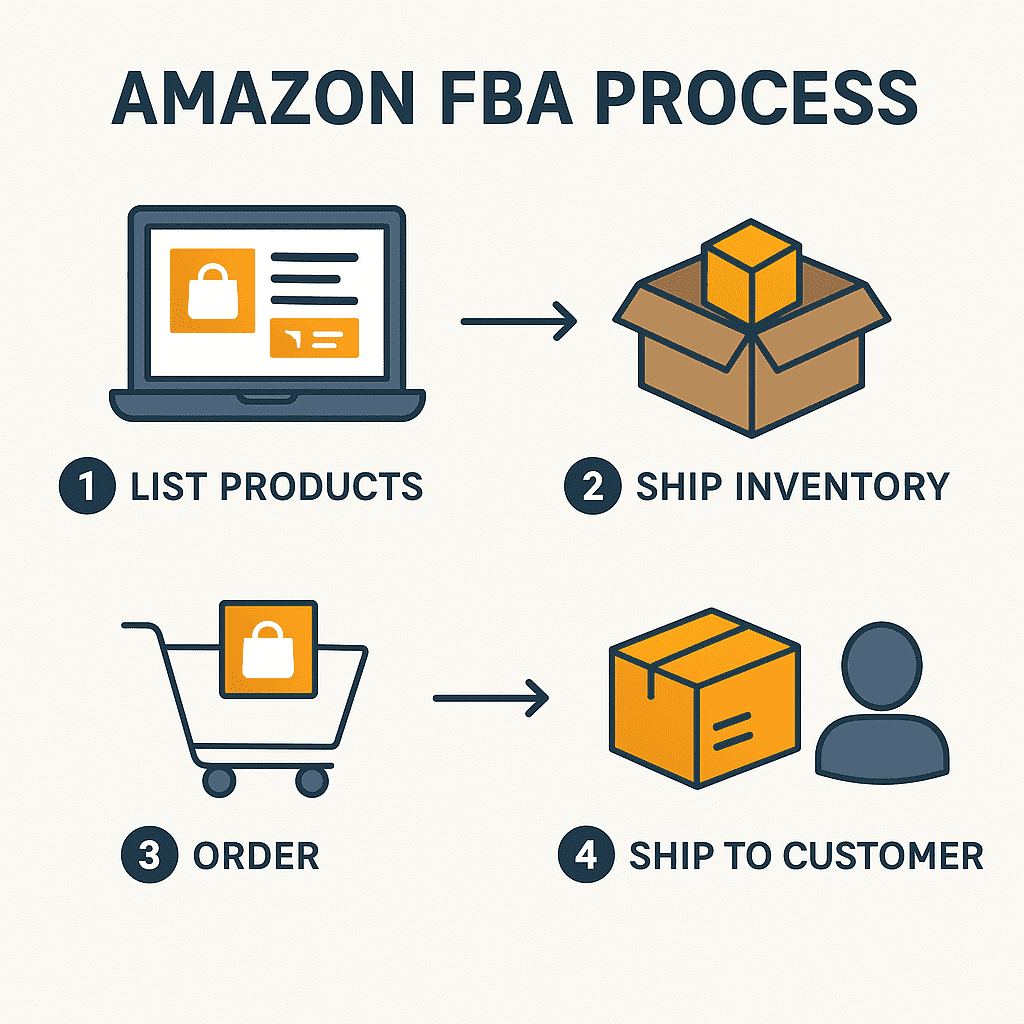
Amazon has over 310 million active users worldwide. Unlike building a store from scratch, Amazon gives you immediate exposure to buyers actively looking to purchase. - Fulfillment by Amazon (FBA)
One of Amazon’s biggest advantages is FBA. Amazon handles storage, packing, shipping, and even returns. This lets beginners focus on sourcing products and marketing, rather than logistics. - Built-In Trust
Buyers trust Amazon. This reduces the need to build your own brand credibility from scratch, which is a huge advantage for beginners. - Prime Customer Base
Millions of Amazon customers are Prime members. They expect fast shipping, which makes FBA a perfect solution to meet their expectations.
Step-by-Step Guide to Selling on Amazon
- Sign Up for an Amazon Seller Account
Start here: Start Selling on Amazon
Choose between an Individual account (pay per sale) or a Professional account (monthly subscription). - Select Your Product
- Use tools like Jungle Scout or Helium 10 to find trending products.
- Look for products with high demand and low competition.
- List Your Product
- Include high-quality images.
- Optimize your product title, description, and keywords.
- Choose Fulfillment Method
- FBA (Amazon handles logistics)
- FBM (You handle shipping)
- Launch and Promote
- Run Amazon ads
- Encourage early reviews
Common Beginner Mistakes on Amazon
- Ignoring Amazon SEO: Poor keyword research can bury your listing.
- Pricing Too Low: Many beginners underprice, which hurts profitability.
- Skipping Product Research: Selling without validating demand leads to slow sales.
- Neglecting Reviews: Positive reviews are essential for ranking and trust.
Pros and Cons of Amazon
| Feature | Pros | Cons |
|---|---|---|
| Traffic | Millions of ready-to-buy users | Highly competitive |
| Fulfillment | FBA handles storage & shipping | Fees can be high |
| Branding Control | Leverage Amazon’s trust | Limited customization |
| Start-Up Cost | Low for Individual accounts | FBA fees and referral fees apply |
Shopify: The Customizable eCommerce Platform
Unlike Amazon, Shopify allows you to build your own online store. You’re not just selling a product—you’re building a brand.
Why Beginners Choose Shopify
- Full Branding Control
Customize your store’s colors, layout, and messaging. Make your brand truly yours. - Customizable Features
Shopify offers thousands of apps, themes, and integrations. Need a subscription box? Done. Want social media integration? Easy. - Comprehensive Marketing Tools
Shopify includes SEO, email marketing, and analytics tools to help drive traffic and conversions. - Scalable Growth
Your Shopify store can grow as big as your ambition. Unlike Amazon, you’re not constrained by a marketplace.
Step-by-Step Guide to Setting Up Shopif
- Sign Up for Shopify
Start here: Start Your Shopify Store
Choose a plan (free trial available) and pick a store name. - Choose a Theme
Shopify has free and paid themes. Pick one that suits your niche. - Add Products
- Write compelling product descriptions.
- Use high-quality images.
- Organize products into collections for easier navigation.
- Install Apps
- Email marketing apps (e.g., Klaviyo)
- Upsell apps for increasing average order value
- Social proof apps for reviews
- Set Up Payment & Shipping
Shopify supports multiple payment gateways (Stripe, PayPal, etc.)
Configure shipping rates and logistics. - Launch Your Store & Market It
- Run Facebook & Instagram ads
- Use TikTok or YouTube for organic traffic
- Start an email list for repeat customers
Common Beginner Mistakes on Shopify
- Neglecting Marketing: Unlike Amazon, Shopify requires you to drive traffic yourself.
- Overcomplicating the Store: Too many apps or features can slow down your website.
- Ignoring Mobile Optimization: Most buyers shop on mobile, so your store must be mobile-friendly.
- Skipping Analytics: Track conversions to understand what’s working and what’s not.
Pros and Cons of Shopif
| Feature | Pros | Cons |
|---|---|---|
| Branding Control | Full customization of store | Requires marketing for traffic |
| Tools & Apps | Huge selection for SEO, email, upsells | Monthly subscription + app costs |
| Scalability | Unlimited growth potential | Learning curve for beginners |
| Ownership | Own your customer list and data | Must manage fulfillment unless outsourced |
Amazon vs Shopify 2025: In-Depth Comparison
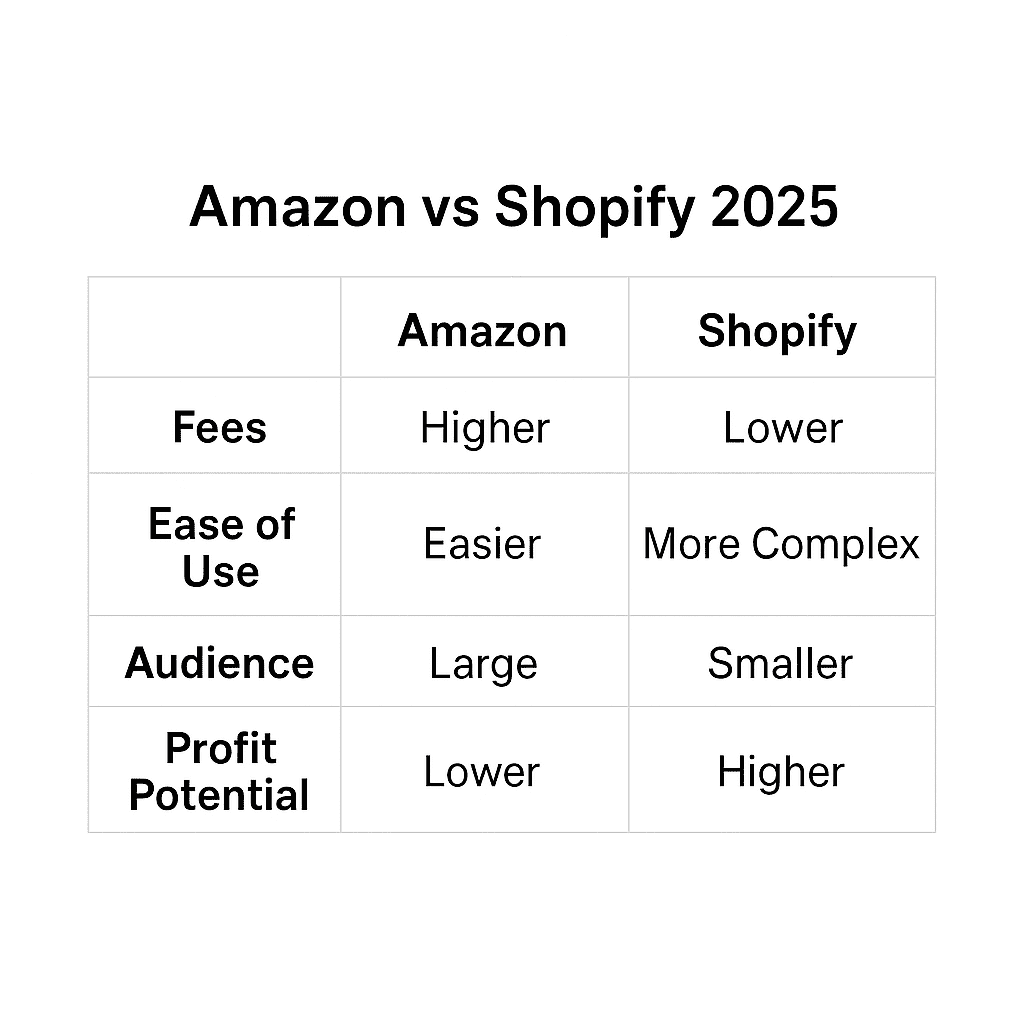
| Feature | Amazon | Shopify |
|---|---|---|
| Traffic | Built-in, millions of buyers | Must generate traffic yourself |
| Branding | Limited | Full control |
| Startup Cost | Low for Individual account | Monthly subscription + apps |
| Fulfillment | Amazon FBA handles logistics | Self-managed or third-party |
| Competition | Very high | Depends on niche |
| Profit Potential | Medium (fees cut margins) | High (full control of pricing & sales) |
Case Studies: Beginners Winning on Each Platform
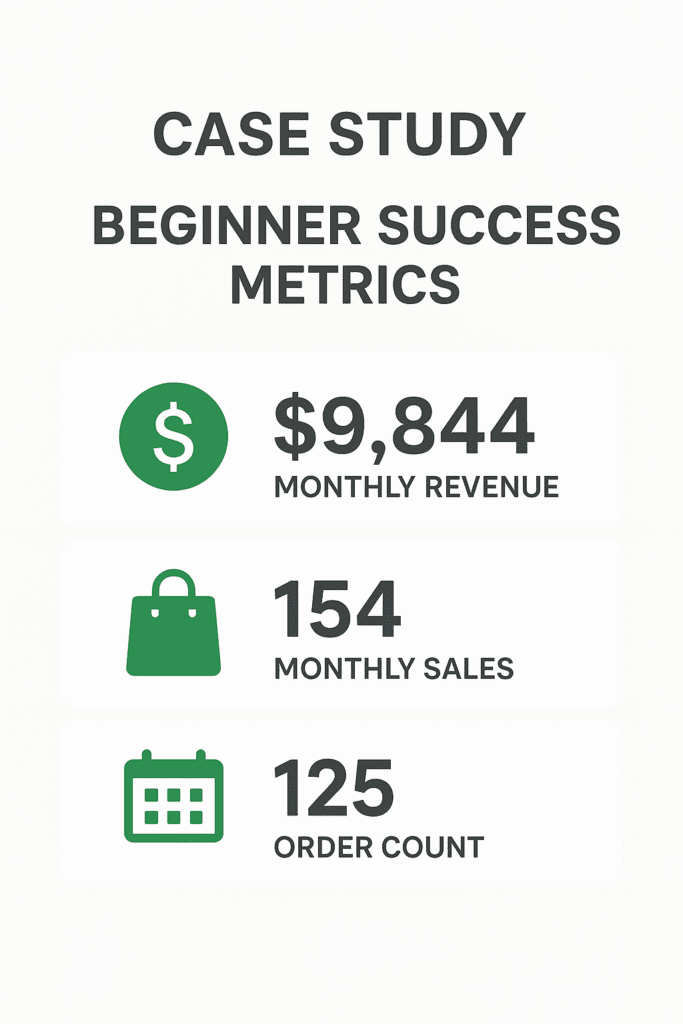
- Amazon Example: Jane started selling kitchen gadgets on Amazon FBA in 2024. Within 6 months, she reached $5,000/month in profit by leveraging trending products and Amazon ads.
- Shopify Example: Mike launched a custom jewelry store on Shopify. By using TikTok ads and influencer marketing, he grew to $10,000/month within 8 months, building a strong brand with repeat customers.
Choosing the Right Platform for Your Beginner Persona
Ask yourself these questions:
- Do I want a ready-made audience or am I willing to market my own store?
- Do I want to build a long-term brand?
- How much time and money can I invest upfront?
- Am I okay with Amazon’s fees, or do I want full control over pricing?
- Choose Amazon if you want fast access to buyers and minimal store management.
- Choose Shopify if you want brand ownership, scalability, and long-term growth.
Affiliate tie-in: Use Fiverr to hire experts for store setup, design, or marketing: Hire eCommerce Experts on Fiverr.
Marketing & Scaling Strategies for Beginners
Amazon Marketing Tips
- Use Amazon Sponsored Ads to boost visibility.
- Optimize your listings with keywords and high-quality images.
- Encourage early reviews with follow-up emails or inserts.
Shopify Marketing Tips
- Run Facebook, Instagram, TikTok ads for targeted traffic.
- Build an email list to nurture repeat customers.
- Use SEO-optimized content to attract organic traffic.
Scaling Both Platforms
- Outsource repetitive tasks using Fiverr freelancers.
- Expand product lines once you validate winners.
- Implement retargeting campaigns to maximize revenue.
Financial Overview: Fees, Costs & ROI
| Platform | Startup Cost | Monthly Fees | Transaction Fees | Potential ROI for Beginners |
|---|---|---|---|---|
| Amazon | $0–$39.99 | Included in FBA | 8–15% per sale | Medium |
| Shopify | $29–$79 | Apps add $10–50 | 2.9% + $0.30 per txn | High |
Tip: Beginners should calculate all costs before launching to avoid surprises.
Action Plan for Beginners
- Decide on Amazon or Shopify based on goals.
- Set up your store step-by-step.
- Research products thoroughly.
- Use Fiverr to get expert help where needed.
- Launch, market, and optimize constantly.
- Track ROI and adjust strategies.
Affiliate Links Recap:
Final Thoughts
Both Amazon and Shopify are excellent platforms for beginners in 2025. Your choice depends on whether you prioritize instant audience access or brand ownership and long-term growth.
By understanding each platform’s strengths, pitfalls, and marketing strategies, you can make an informed decision and set yourself up for eCommerce success. The tools and support are availableit’s time to take action and start building your online business today.

Pingback: Start a Side Hustle and Build Your Own Online Store in 2025