
Introduction
Online job scams in Canada are becoming more common, targeting job seekers with fake offers that can cost them money and personal information. Whether you’re applying for remote work or local opportunities, knowing how to spot these scams is essential to protect yourself. In this guide, we’ll break down the most common online job scams in Canada and give you clear steps to stay safe while job hunting.
Looking for work online can feel exciting flexibility, freedom, and the chance to earn from home without commuting. But for many Canadians, that search comes with a hidden risk: online job scams. Every year, thousands of people lose money, personal information, and even their identity to fraudulent job postings.
If you’ve ever wondered, “If online job real or fake?” this guide is for you.
By the end of this article, you’ll know:
- The most common online job scams in Canada.
- The red flags to watch for in job postings.
- How to verify if a job is legitimate.
- Where to find safe platforms for online work.
- What to do if you’ve been scammed already.
This is your big guide to staying safe while pursuing real opportunities to make money online in Canada.
See my suggestion for you Online Micro Jobs from Home in Canada” as a follow-up for safe alternatives.
Why Online Job Scams Are a Growing Problem in Canada
The shift to remote work has created amazing opportunities—but it also opened the door for scammers.
- According to the Canadian Anti-Fraud Centre, Canadians lost millions of dollars to job scams in recent years.
- Many scams are disguised as work-from-home opportunities, often targeting people who need flexible income the most:
- Students
- Stay-at-home parents
- Newcomers to Canada
- People struggling financially
Scammers exploit trust, urgency, and hope, making their fake offers look professional.
Link to “How to Make Extra Income from Home in Canada.”
Common Online Job Scams in Canada You Should Know
Here’s a breakdown of the top scams you need to know about.
1. Fake Job Listings
Fraudsters post jobs on social media, fake websites, or even legitimate job boards. The positions usually:
- Sound too good to be true (“Work 2 hours/day, earn $2,000/week!”).
- Have vague job descriptions.
- Use free email addresses (Gmail, Yahoo) instead of company emails.
Relevant image idea: Side-by-side screenshot of a fake job ad vs. a real one.
2. Advance Fee Scams
You’re told you got the job,but first, you must pay for:
- Training
- Equipment
- Certification
- Membership
Legit employers will never ask you to pay before starting work.
3. Phishing Scams
Scammers send emails pretending to be from real companies, asking you to:
- Fill out “application forms” that request your SIN, banking info, or ID.
- Click links to fake websites that steal your login details.
4. Fake Cheque & Overpayment Scams
These scams usually start with someone offering you a job and quickly sending you a cheque to deposit into your account. The scammer will then ask you to send part of the money back, claiming it’s for work materials or other expenses.
I personally experienced this type of scam. Someone called me, offering me a job and asking me to deposit a cheque into my account. About 30 minutes later, I received an alert that the money appeared in my account. The scammer then called again, insisting that I send half of the money back so he could purchase the “ordinary materials” I would need for the job.
Thankfully, before I could send the money, my bank called me and warned me that the cheque was fake. Had I gone through with the transfer, I would have lost my own money while the fake deposit eventually bounced.
Lesson:
Never trust employers or individuals who send you a cheque and then ask you to return part of the funds. Always verify deposits with your bank before spending or transferring any money.
5. Reshipping or Package Handling Scams
You’re asked to receive, repackage, and forward items. In reality, these goods are stolen. Participating can lead to legal trouble.
6. Cryptocurrency & Investment Job Scams
Scammers lure you with “crypto trading jobs” or “investment training.” They’ll ask for upfront money or push you into fake platforms that steal your funds.
Red Flags: How to Spot a Scam Job Posting
Use this checklist before applying to any job:
- Too good to be true pay promises.
- Poor grammar/spelling in job ads.
- No clear company name, website, or physical address.
- Requests for upfront payment for equipment or training.
- Asking for sensitive info (banking, SIN) early in the process.
- Urgency or pressure: “Apply now or lose this opportunity!”
If a posting shows 2–3 of these red flags, walk away.
Internal link suggestion: Link to “Top Online Jobs for Beginners in Canada.”
Real-Life Examples of Job Scams in Canada
- The Remote Admin Job Scam
Victims received fake job offers through email. They were mailed counterfeit cheques and asked to forward part of the money. Losses ranged from $1,000–$5,000. - The Reshipping Job Scam
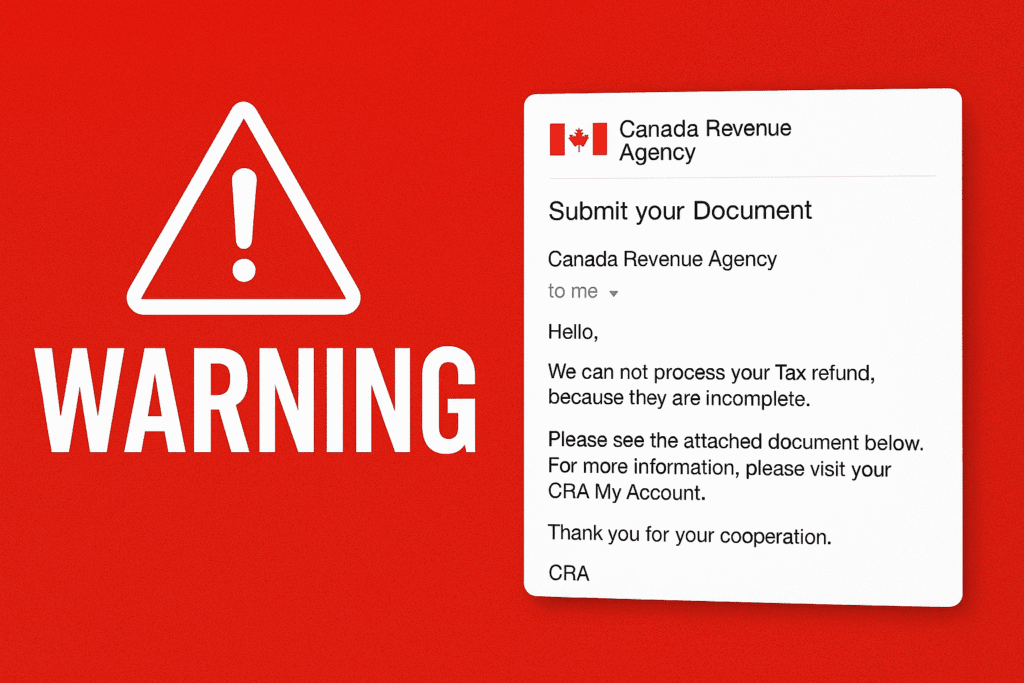
Canadians were told to work as “package inspectors.” They unknowingly handled stolen goods, which put them at legal risk. - CRA Job Scam Emails
Fraudsters impersonated the Canada Revenue Agency, offering “remote tax agent jobs” while stealing SIN numbers and personal details.
How to Verify if a Job is Legitimate
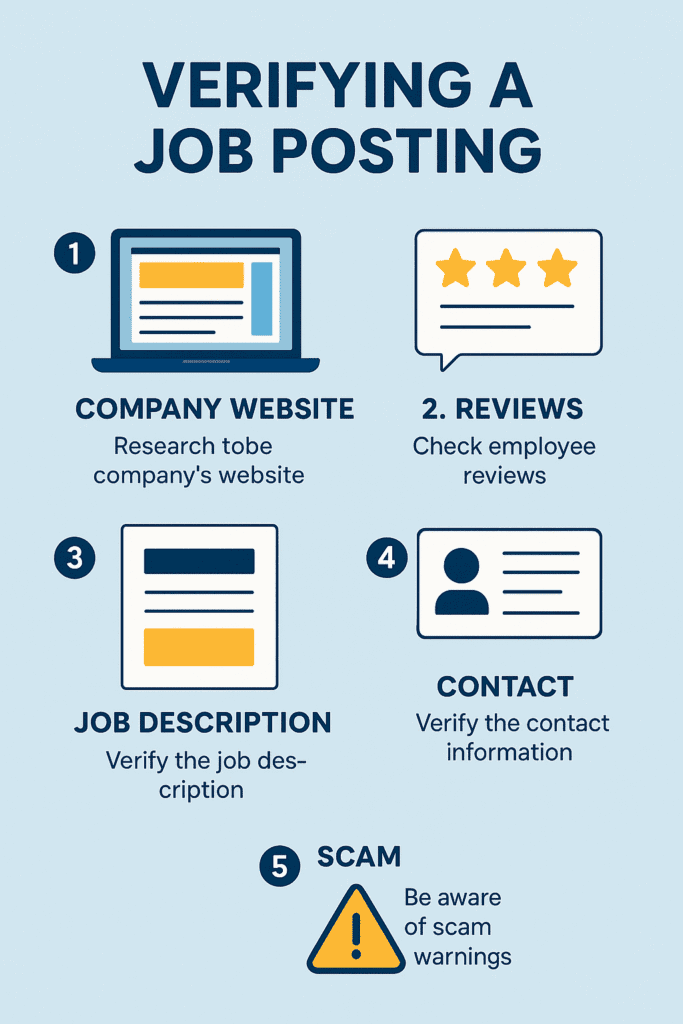
Before applying or accepting any online job, do these checks:
- Research the company
- Check its website, LinkedIn, and business directory listings.
- Look for reviews on Google or Glassdoor.
- Check the job posting
- Copy/paste parts of the description into Google. Scammers often recycle fake ads.
- Contact the company directly
- Use official emails (e.g., HR@company.com). Avoid generic Gmail/Yahoo.
- Use WHOIS lookup
- Find when a website was registered. Scam sites are usually very new.
- Ask in forums or groups
- Canadian job seeker groups often expose fake jobs quickly.
Safe Platforms for Canadians to Find Online Jobs
Not all online work is risky. Here are legit platforms to start with:
- Freelancing: Upwork, Fiverr, Freelancer
- Job boards: Indeed Canada, LinkedIn Jobs, Glassdoor
- Microtasks: Swagbucks, Pinecone Research, Clickworker
- Transcription: Rev, TranscribeMe, Scribie
- Teaching/Tutoring: VIPKid, Cambly
Stick to well-known platforms with verified payment systems.
suggestion: Link to “The Ultimate Guide to Making Money Online in Canada.”
How to Report Online Job Scams in Canada
Don’t panic take immediate action:
- Stop all communication with the scammer.
- Report it to the Canadian Anti-Fraud Centre.
- Contact your bank to block transactions.
- Change all passwords connected to the scam.
- Monitor your credit report for unusual activity.
- Warn others by sharing your experience online.
Long-Term Safety Tips
- Never pay upfront for a job.
- Use a separate email for job applications.
- Avoid sharing SIN or banking info until after a formal contract.
- Stick to Canadian-based or global trusted job boards.
- Regularly educate yourself about new scam tactics.
Conclusion
Online job scams are everywhere in Canada—but they don’t have to stop you from finding real opportunities.
By learning the types of scams, recognizing the red flags, and following the verification steps, you can protect your money, your identity, and your peace of mind.
If you’re ready to explore safe opportunities, check out:
- “Online Micro Jobs from Home in Canada”
- “Work-from-Home Opportunities in Canada”
With the right knowledge, you can confidently pursue legit online income while avoiding traps set by scammers.
Want more tips like this? Join our free SKYTRILLION newsletter


Pingback: Online Micro Jobs from Home in Canada | Make Money Online